The Testaments wrapped its first season on May 27 and was renewed for a second before the finale even aired, which means Gilead is now a two-show, two-book universe with more on the way. The odd part is how little of it comes from Margaret Atwood. There are exactly two novels, published 34 years apart, and between them they account for roughly one season of the 76 episodes Hulu has produced.
That gap is the useful thing to know before you start. The Handmaid’s Tale is a short, first-person book that ends where Season 1 ends. Everything after that, six seasons of it, is original. The Testaments is different: three narrators, fifteen years later, and it’s the book the current show is actively working through rather than one it already passed. Here are both in order, what each show did with them, and where to read or listen.
Where to Start
| I just finished the shows | I’ve never read either |
|---|---|
| Read The Testaments. The Testaments show has only adapted part of it, and the book goes places the season hasn’t reached | Read The Handmaid’s Tale first. It’s under 350 pages and the sequel assumes you know it |
Both books work as standalone reads, but The Testaments opens with the assumption that you already understand what a Handmaid is and why Aunt Lydia matters. Read them in publication order.
Book to Season Map
| Book | Show | Seasons |
|---|---|---|
| The Handmaid’s Tale (1985) | The Handmaid’s Tale | Season 1 |
| No book (original story) | The Handmaid’s Tale | Seasons 2 to 6 |
| The Testaments (2019) | The Testaments | Season 1, Season 2 (renewed) |
That middle row is the part most people don’t expect: five of the six seasons of The Handmaid’s Tale aren’t adapted from anything. Here’s how it breaks down.
How Much of the Book Does Each Show Actually Cover?
The Handmaid’s Tale: Season 1 is the novel. All ten episodes, start to finish, ending with June climbing into the van without knowing whether the Eyes are arresting her or rescuing her. That’s the last line of the book too. The show padded the runtime with flashbacks and gave real interior lives to characters Atwood left as figures glimpsed from a distance, Serena and Ofglen especially, but the plot is the plot.
Seasons 2 through 6 are not the novel. Bruce Miller and his writers built five more seasons out of a world Atwood had sketched but never filled in: the Colonies, Canada, New Bethlehem, Mayday as an actual organization. June’s entire arc after that van is invented. The series ran from April 2017 to May 2025, 66 episodes across six seasons, and the finale circles back to the Waterford house and to June recording the story that becomes the book you’d have read.
The Testaments is a live adaptation, not a finished one. Season 1 ran ten episodes from April 8 to May 27, 2026, and it covers the setup rather than the whole novel: Agnes inside Aunt Lydia’s academy for future Wives, Daisy arriving from outside, Aunt Lydia playing a much longer game than anyone around her realizes. Miller has said he’d expect the series to run 30 to 50 episodes, so the book is being spread thin on purpose. If you read it now, you’re ahead of the show.
The show also does something the novel can’t: Elisabeth Moss appears as June. The book has no June in it at all. Her presence is the bridge between the two series and it’s original to Hulu.
The Gilead Novels in Order
Two books, both excellent on audio, both with full-cast recordings that are genuinely better than the average.
Tap any title to expand it ▾
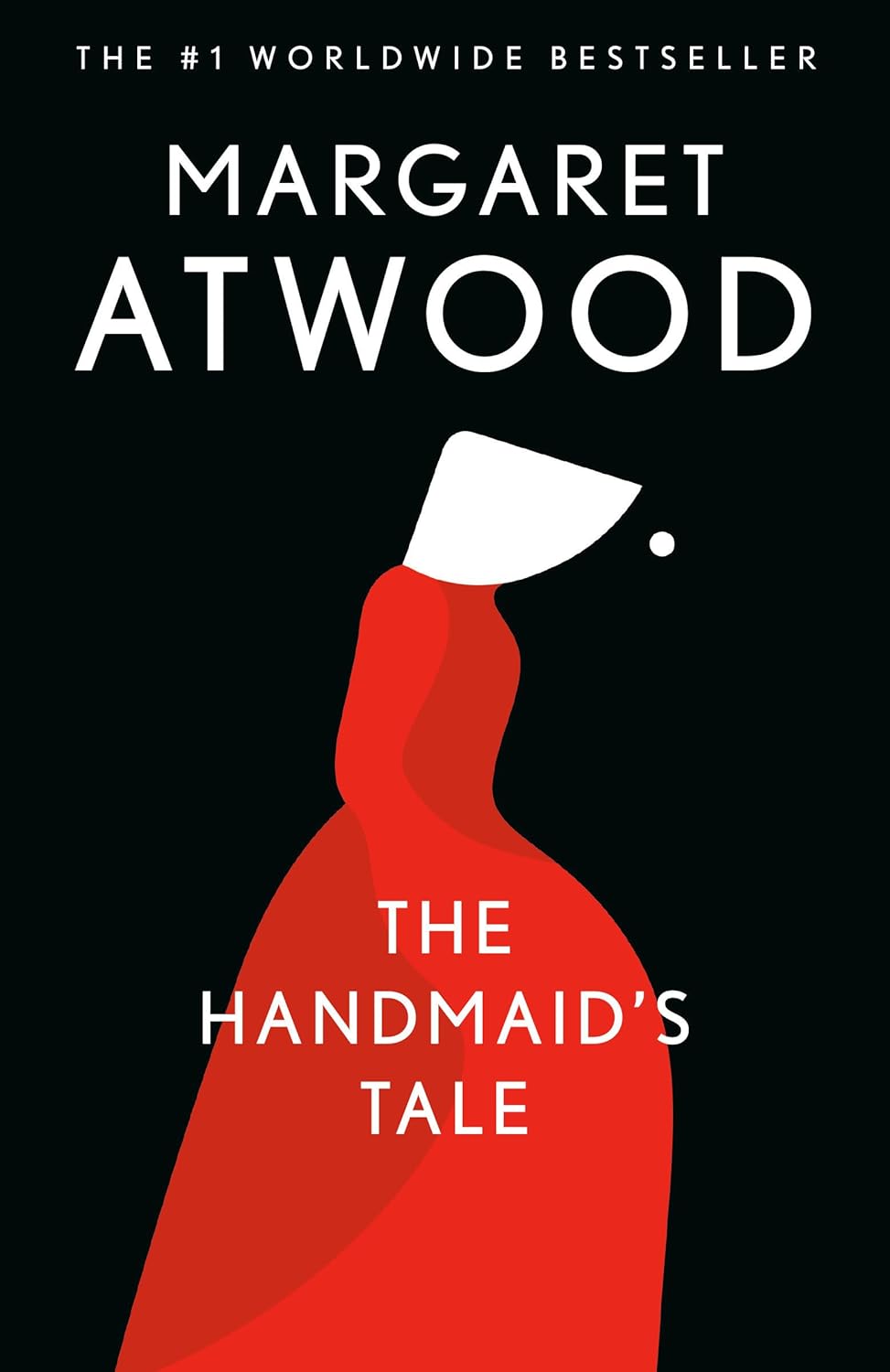 The Handmaid's Tale
Offred is a Handmaid in Gilead, a near-future theocracy built on the ruins of New England that has stripped women of money, work, reading, and their own names, and assigned the few fertile ones to bear children for powerful households. She narrates in fragments: the ritual she submits to once a month, the Commander who starts breaking his own regime’s rules, the Wife who wants something from her, the shopping partner who may or may not be an informant, and underneath it all the husband and daughter taken from her when the borders closed.
It’s a short book and a claustrophobic one. Atwood’s rule while writing was that nothing in Gilead would be invented, that every practice in it had a precedent somewhere in history, which is a large part of why it hasn’t dated. The ending is deliberately unresolved, followed by the Historical Notes epilogue that turns the entire narrative into a document being picked over by scholars two centuries later.
On audio it’s read by Claire Danes with a full cast for the epilogue and an afterword by Atwood. Danes’ Offred is flat and controlled in exactly the way the character has to be, which makes the moments it cracks land hard.
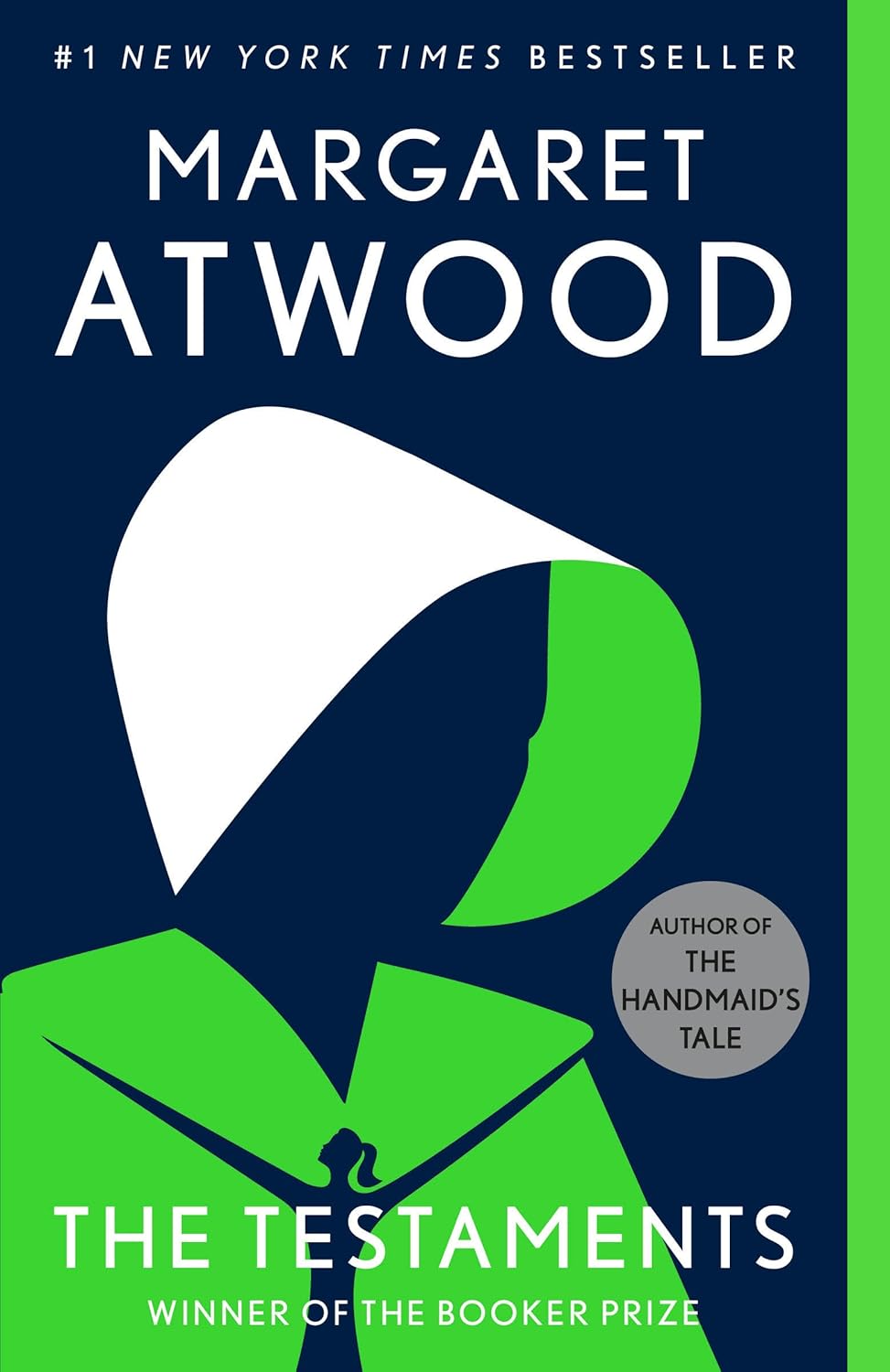 The Testaments
Fifteen years on, Gilead is rotting from the inside, and Atwood tells the collapse through three testimonies. One belongs to Aunt Lydia, writing in secret and revealing how a family court judge became the architect of the Aunts, which is the best material in either book. One belongs to Agnes, raised entirely inside Gilead and being groomed for marriage without ever having been told the truth about where she came from. One belongs to Daisy, a teenager in Toronto whose life turns out to be a cover story.
It answers questions the original left deliberately open, which some readers love and some don’t. It shared the 2019 Booker Prize with Bernardine Evaristo’s Girl, Woman, Other.
The audiobook is a proper full-cast production: Ann Dowd reads Aunt Lydia, carrying her performance straight over from the show, alongside Bryce Dallas Howard, Mae Whitman, Derek Jacobi, and Tantoo Cardinal. If you only listen to one of the two, make it this one.
There is no third Gilead novel, and Atwood hasn’t announced one. The show is now the only place the story continues.
The Other Handmaid’s Tale Adaptations
Hulu wasn’t first. Gilead has been adapted four other times:
- The 1990 film, directed by Volker Schlöndorff from a screenplay by Harold Pinter, with Natasha Richardson as Offred, Faye Dunaway as Serena Joy, and Robert Duvall as the Commander. It compresses the novel hard and picks a much more definite ending than Atwood did. Worth seeing, mostly for Richardson.
- The 2019 graphic novel, adapted and illustrated by Renée Nault, follows the book closely and does something the prose can’t: it puts you in a world where red is the loudest thing in every panel. A good gift for someone who bounced off the novel.
- A 2000 opera by Poul Ruders and a 2013 ballet by the Royal Winnipeg Ballet, both of which exist and both of which are exactly as strange as that sounds.
The graphic novel is the only one of these that adds anything for a reader rather than a viewer.
Want to see what else is on TV? The TaterTV guide keeps an always-up-to-date view of what’s new and what’s next.
The Handmaid’s Tale Books FAQ
How many Handmaid’s Tale books are there?
Two. The Handmaid’s Tale (1985) and The Testaments (2019). There’s also a graphic novel adaptation of the first one, but it’s the same story, not a third entry.
What order should I read them in?
Publication order. The Handmaid’s Tale first, then The Testaments. The sequel is set more than fifteen years later and assumes you know how Gilead works.
Which season of The Handmaid’s Tale is the book?
Season 1, and only Season 1. All ten episodes cover the novel, and the season ends where the book ends. Seasons 2 through 6 are original stories written for the show.
Is The Testaments show the same as the book?
Same characters, same premise, different pace. Season 1 covers the early stretch of the novel and expands it considerably, including bringing in June, who doesn’t appear in the book at all. The novel goes further than the season does.
Do I need to watch The Handmaid’s Tale before The Testaments?
Not strictly, but it helps a lot. The Testaments Season 1 assumes you know who Aunt Lydia is and what Gilead does to people. If you’re short on time, read the first novel instead of watching six seasons.
Is The Testaments renewed for Season 2?
Yes. Hulu renewed it in May 2026, before the first season had even finished airing.
Should I read The Testaments or wait for the show?
Read it. The show is planned to run for years and is only part of the way through the book. Reading it now means you’ll understand what Aunt Lydia is actually doing well before the series gets there.
Which audiobook is better?
The Testaments, by a margin. It’s a full-cast recording with Ann Dowd reading Aunt Lydia, and the three-narrator structure suits audio perfectly. Claire Danes’ reading of The Handmaid’s Tale is very good, but it’s one voice doing a deliberately restrained narration.
New to Audible? Two books is a light lift, and both are strong enough on audio to be worth a credit each. A free trial comes with credits, so start with Claire Danes on The Handmaid’s Tale if you’re new to Gilead, or go straight to the full-cast The Testaments if you’ve already watched.
Want more shows that started as books? See 11 TV Shows Based on Books and 10 New TV Shows Based on Books, or browse the full TV Shows Based on Books archive.